For clinicians and facilities
Meaningful play for everyday care
We’re developing guided play for South Korean care facilities, with a planned path toward greater Northeast Asia and APAC, connecting resident engagement with consent-based brain research
Designed for supervised wellness, research, and elderly-care engagement. Not a diagnostic or treatment device.
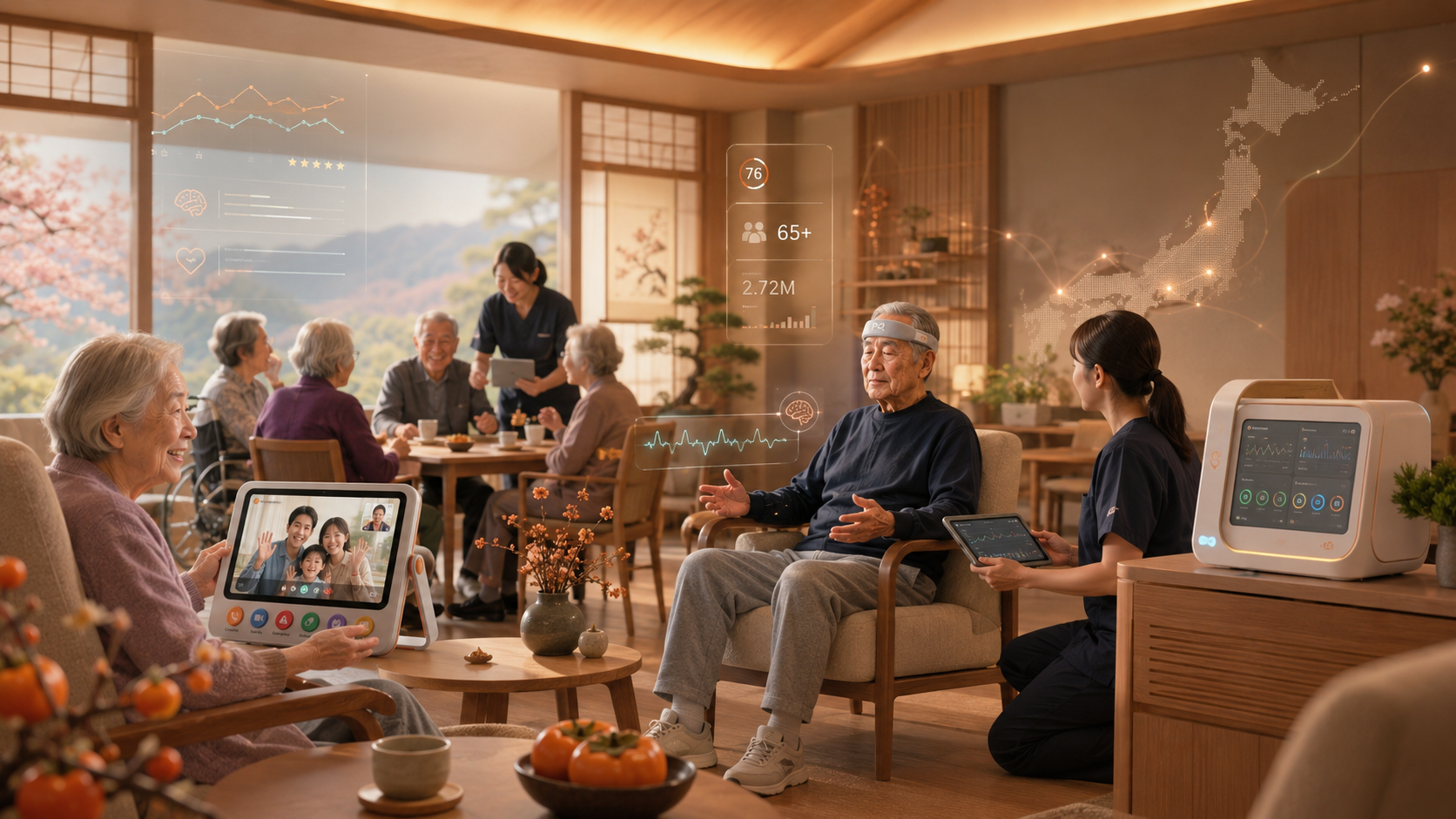
Facility need
Everyday engagement, lasting insight
We’re exploring how familiar activities can help care teams understand participation over time
Resident engagement
A familiar, low-friction activity designed to feel enjoyable rather than clinical
Staff visibility
Session summaries help staff understand participation patterns without adding heavy workflow
Family connection
Remote multiplayer moments allow residents to play with children or grandchildren
Research-ready data
With appropriate consent and validation, EEG-informed signals could support longitudinal aging-brain research
Workflow shift
From the lab to daily care
A comfortable headband and guided activities are at the center of our proposed care workflow. Staff support setup, consent, and each session.
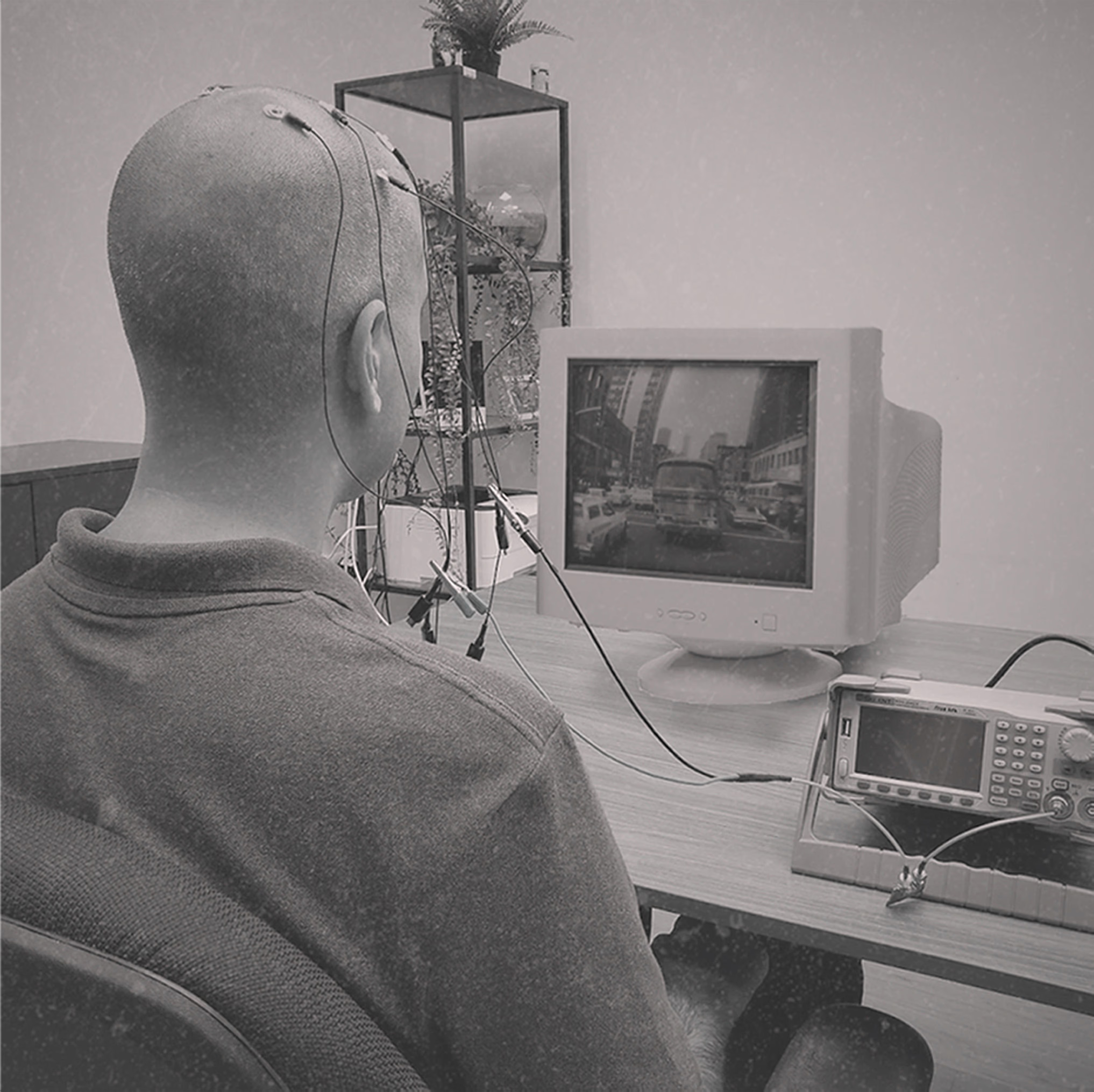
Traditional setup
- Many electrodes
- Specialist setup
- Lab or clinic visit
- Expensive equipment
- Hard to repeat frequently
- Difficult for nursing homes to scale
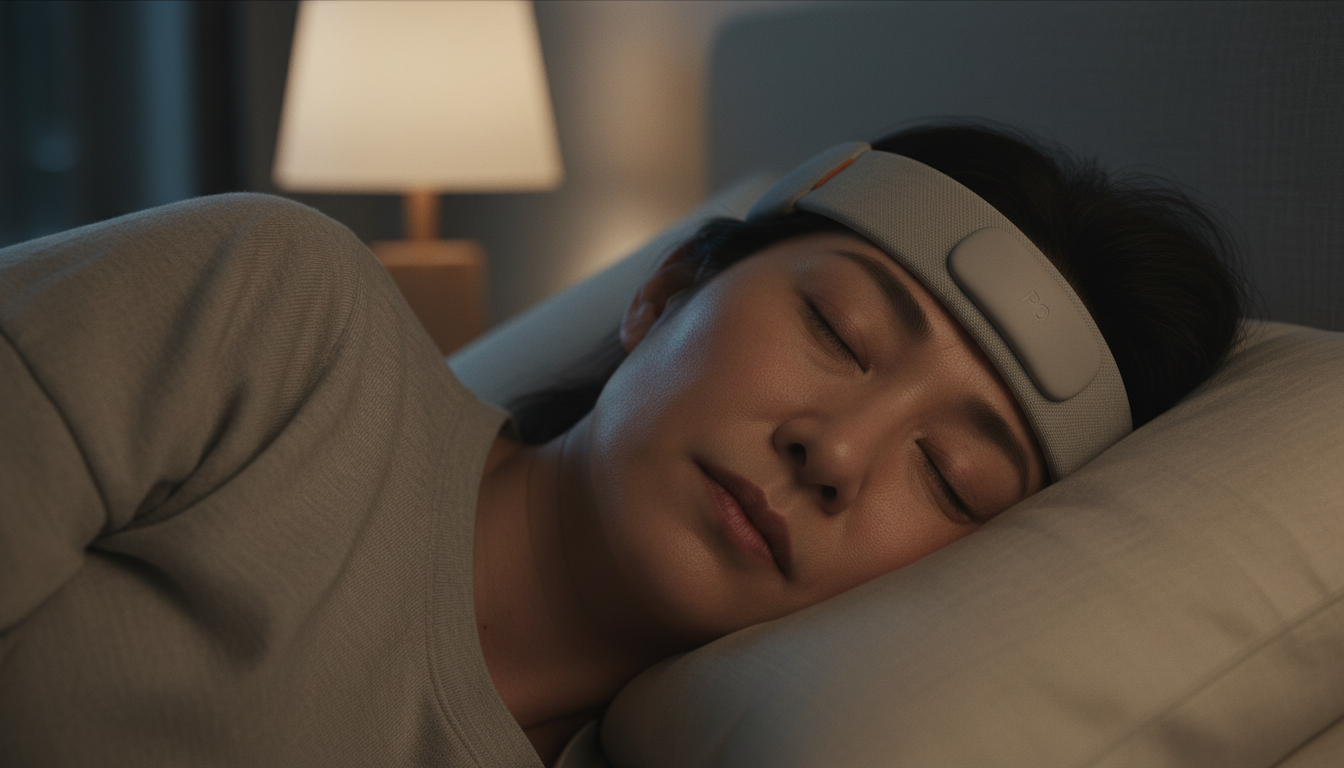
Persimmon Quest setup
- Simple qBand Air
- qCore Pillar edge device
- Guided tablet workflow
- Familiar pachinko-inspired interaction
- Staff-friendly sessions
- Longitudinal research signals
Brain assessment
A broader view of neural activity
The proposed workflow combines EEG-informed signals, cognitive tasks, and staff observations to explore useful research baselines over time
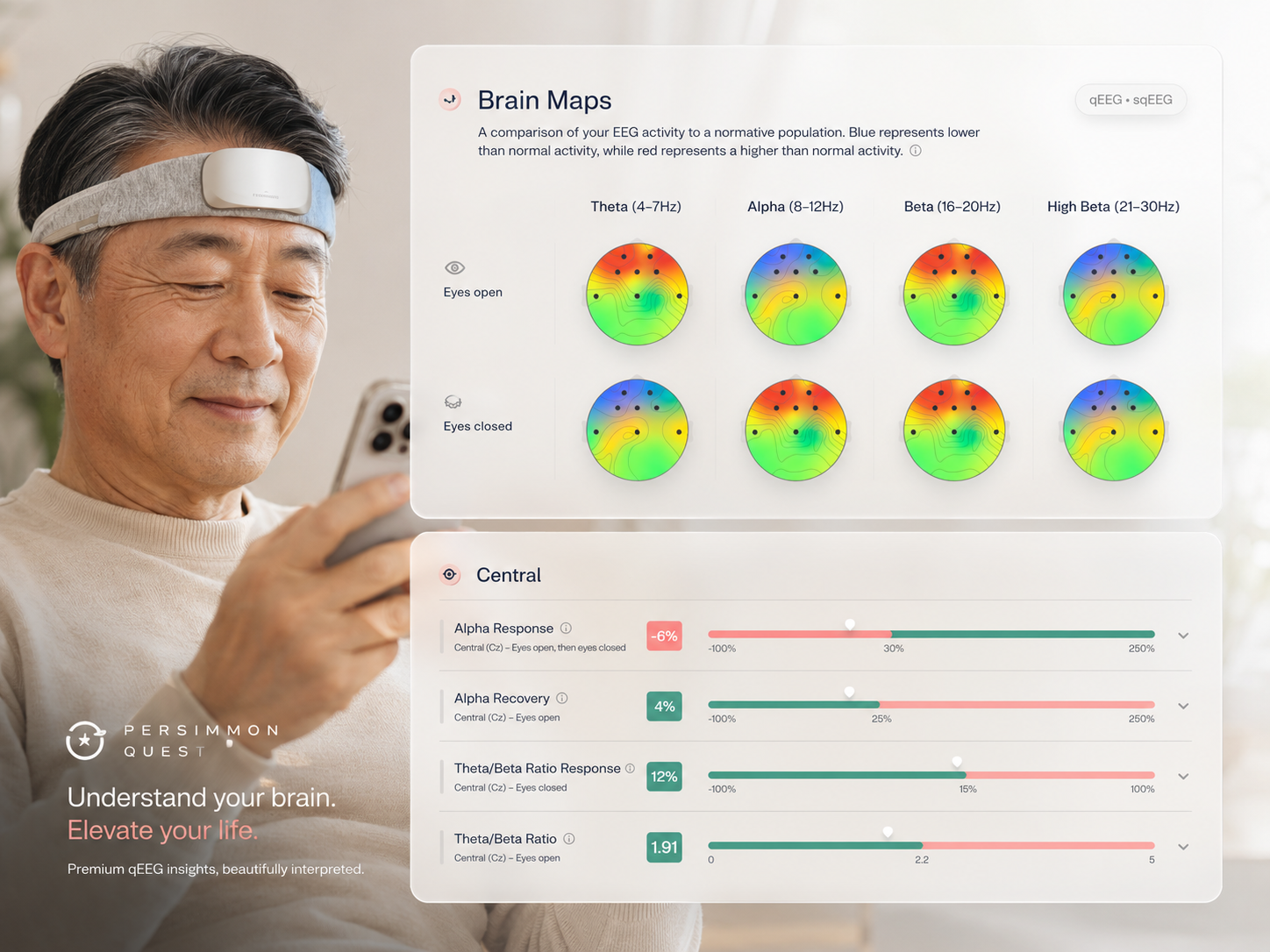
Staff dashboard
A clear view for care teams
A dashboard concept for session readiness, participation, and follow-up tasks
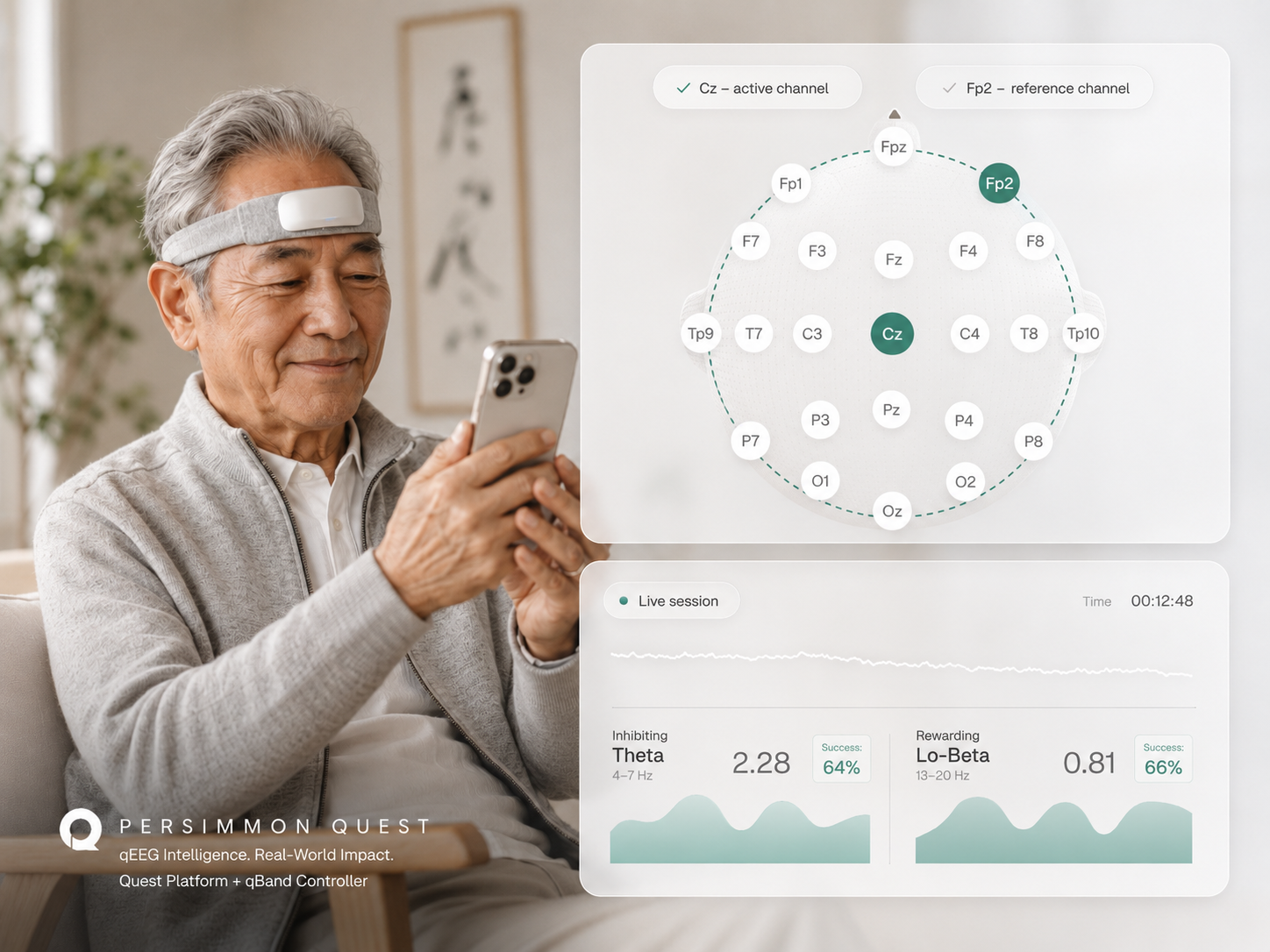
Comfort with precision
Comfort by design
qBand Air is intended to feel simple and non-intimidating for elderly residents while supporting supervised exploration of neural signals
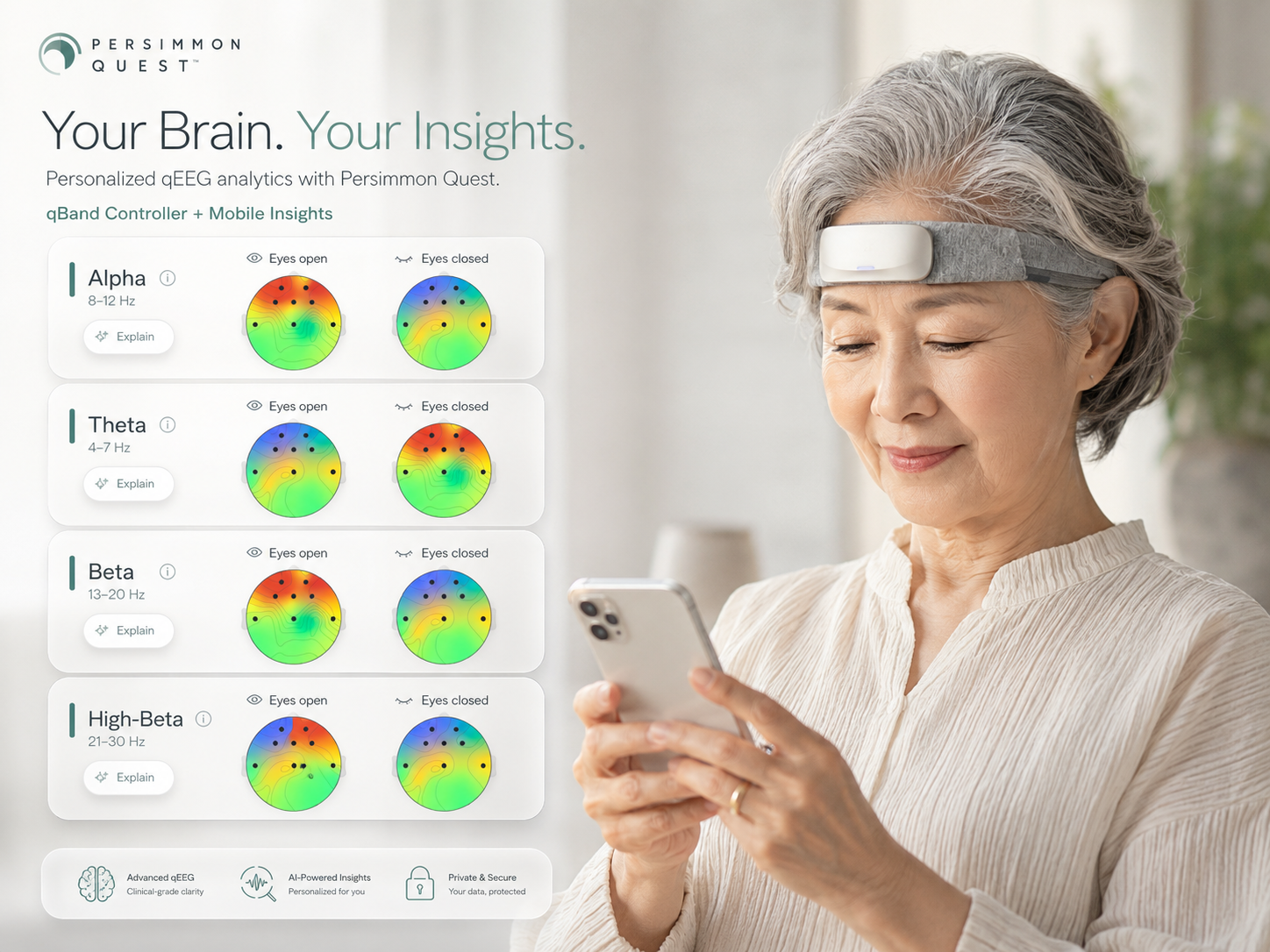
Cognition builds narrative
What is neurofeedback?
Neurofeedback is a form of EEG-based brain training. Sensors measure brainwave activity in real time. When the user's brain activity moves toward a target pattern, the system gives gentle feedback through visuals, sound, or gameplay. Over repeated sessions, this feedback loop may help users practice self-regulation.
Persimmon Quest is currently positioned for supervised engagement, wellness, and research workflows. It should not be presented as a cure or replacement for medical treatment.
Your personal algorithm
What is neuroadaptive learning?
Neuroadaptive learning means an experience can change based on a user's brain and behavior. Persimmon Quest is researching how qBand signals and qCore processing could eventually inform session difficulty, pace, and feedback style without overstimulation.
Sense
qBand is designed to capture EEG-informed signals
Adapt
qCore is intended to inform game response and session flow
Engage
Resident plays a familiar pachinko-inspired neurogame
Learn
Staff review trends and session summaries
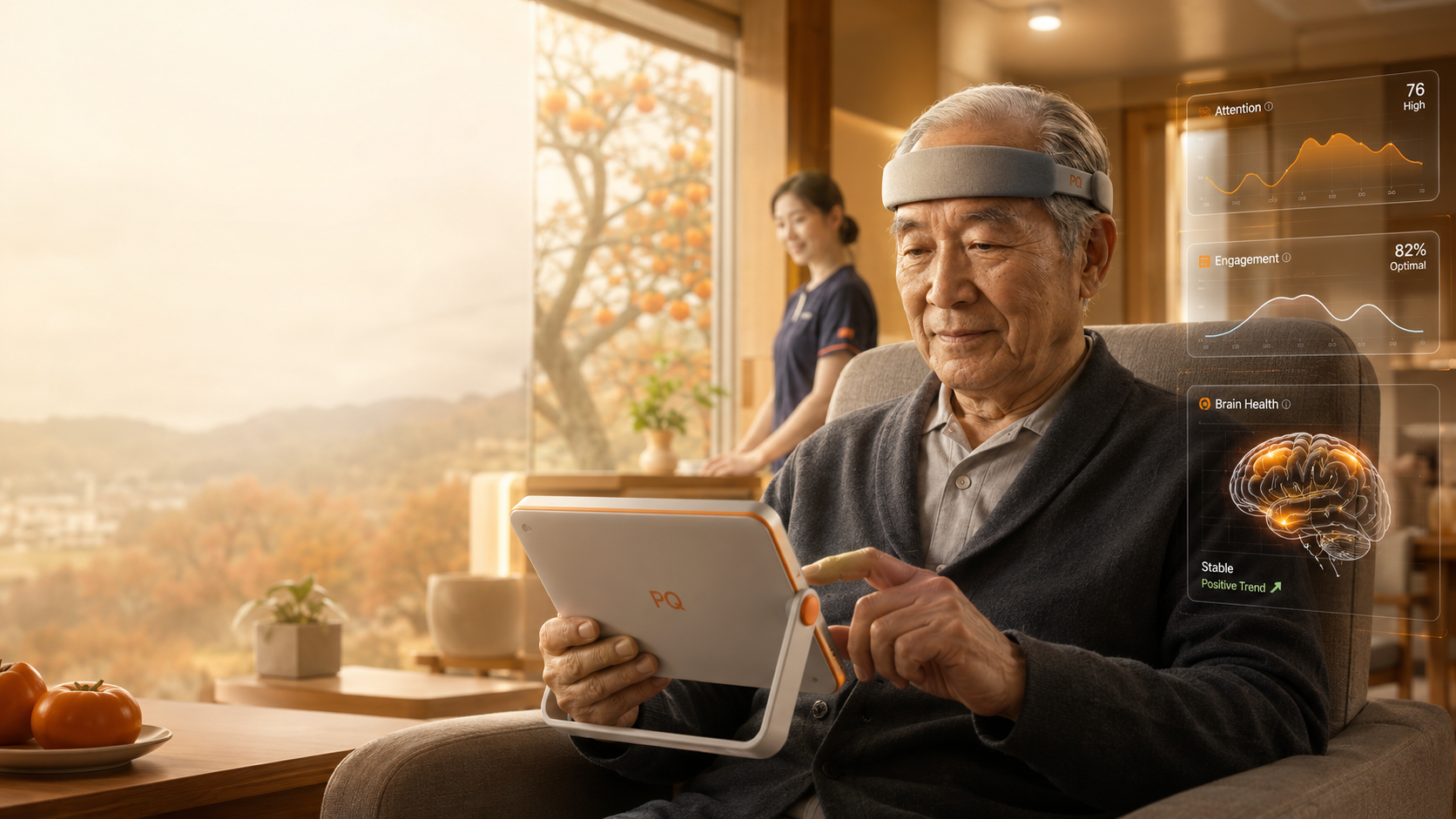
Longevity care as a service
Designed around residents
Gentle challenge
The session adapts to attention and relaxation patterns instead of forcing one fixed difficulty
Family multiplayer
Residents can play connected sessions with family members, creating emotional participation
Progress snapshots
Simple visual summaries help residents and families understand participation over time
Facility value
Empower the residents
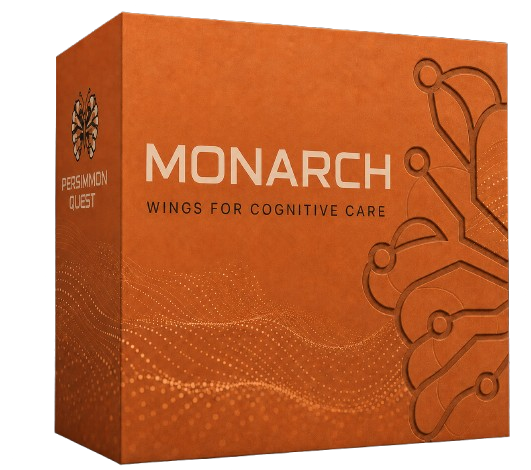
Set agents for consent-based monitoring and care workflow management with Monarch EHR suite
Local processing
Designed to protect sensitive data through local processing
Staff onboarding
Simple workflows for placing the headband, starting sessions, and reviewing results
Facility dashboard
An EHR integration to aggregate engagement trends and interactive EEG session completion
Research collaboration
Consent-based and anonymized data structure designed for future collaboration with neuroscience labs
Differentiation
Position your facility as an early testing partner in Korean and Northeast Asian brain-health innovation
Family communication
Use session snapshots and multiplayer moments to make care feel more connected
Hire us
A pilot, step by step
Contact us to check your facility's operational fit, staff readiness, resident consent planning, and facility safety requirements before we can setup our ecosystem. Fill out this form
Discovery call
We understand your facility size, resident profile, staff workflow, and safety requirements
Prototype setup
We prepare the proposed qCore, qBand, and qPad workflow for the agreed pilot scope
Staff training
Care staff learn how to run short supervised sessions
Guided sessions
Residents participate in scheduled neuroadaptive gameplay
Review findings
Facility owners review the engagement and session findings supported by the pilot
Research planning
For approved partners, we explore anonymized longitudinal data collaboration
Research ethics
Trust before scale
Elderly brain data must be handled with care. Persimmon Quest communicates privacy, consent, staff supervision, and research ethics clearly from the first demo.
Persimmon Quest does not operate as gambling. The pachinko-like UX is redesigned as a supervised cognitive engagement interface with no betting, no prizes, and no monetary reward loop.Common questions
Still have questions?
Is this a medical treatment?
Not at this stage. Persimmon Quest is positioned for supervised wellness, engagement, and research workflows. It is not a diagnostic or treatment device unless future regulatory clearance is obtained.
Do residents need technical knowledge?
No. Residents wear the qBand and interact with the guided experience. Staff use qPad One to start sessions, monitor participation, and review summaries.
What data is collected?
A pilot may collect EEG-derived signals, session duration, engagement patterns, interaction events, and progress summaries depending on consent and facility configuration.
Can families join?
Yes. The concept supports remote multiplayer or video-connected sessions so residents can share gameplay moments with family members.
Build with us
Help shape a facility pilot
Tell us about your residents, care team, and goals for a pilot